Free Raspberry Pie
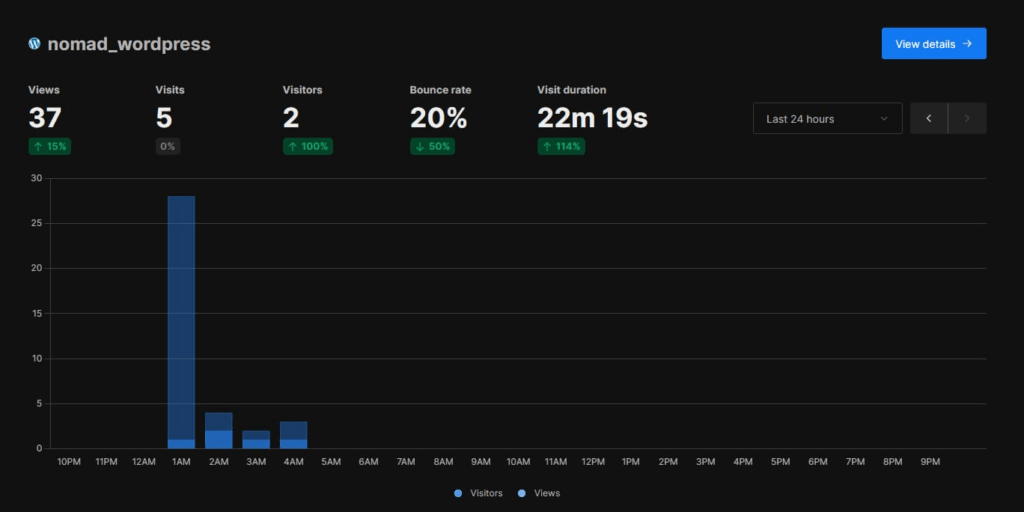
I’ve written numerous blog posts and recorded a series of Raspberry Pi tutorials,
but haven’t received many views or generated much revenue—almost none at all.
Now, a new Raspberry Pi Compute Module 0 has been released, and the manufacturer is offering free trials and promotions. I applied for one.
I didn’t expect a reply or to receive the item, but actually, I received a reply from the manufacturer and the item was shipped within three days.
I’m using it smoothly now.
It’s a new product, supposedly the smallest module available, and also low-power—1W idle and 3W full load.
I originally planned to use it to set up Home Assistant and PVE, but its 512MB of memory and CPU… 1Hz is simply not enough for complex applications.
Ultimately, I used it for network proxy and message center. Because it has 8GB of onboard eMMC, after installing the system, only about 3.2GB of storage space remained. Therefore, it’s only suitable for real-time data such as message forwarding and traffic forwarding, not for storing files or databases.
Looking at the community chat, I found that they are most interested in drones using the Raspberry Pi CM0.
I was previously familiar with DIY drones using ESP32, because ESP32 is small and low-power. However, the Raspberry Pi CM0 core board is relatively thin and small, and can use the Raspberry Pi Linux system for low power consumption, thus offering better expandability for drones.
Furthermore, the Raspberry Pi CM0 has a built-in camera interface, which is very user-friendly for drone photography.
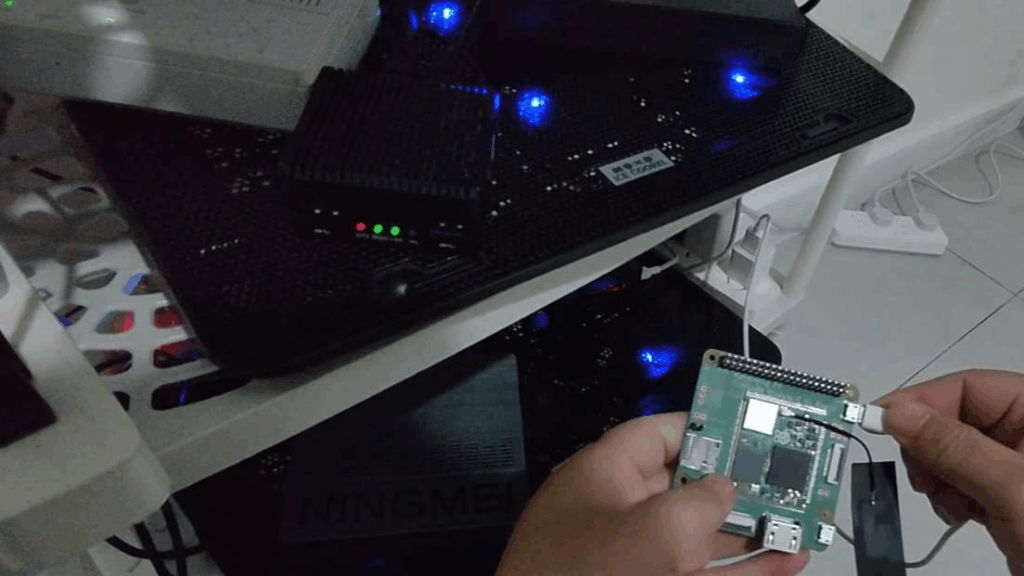
I’ve currently tried frp network proxy and a textual terminal tui information screen.
With limited memory, I’m looking for open-source and free projects, and embedded applications with around 10-30MB of memory to avoid being killed by the system.
Later, I plan to simultaneously develop an NTFSy message center and MQTT message notifications. Since I don’t have much time or need for them yet, I’ll test them when I have time.

This Raspberry Pi CM0 dev kit costs about $30. Although it’s not a profit, it’s the most I’ve ever acquired in terms of equivalent value.
Online order taking
I tried taking on online orders, initially for frp proxy setup, which wasn’t a huge amount.
Now I want to try other services, like Raspberry Pi technical guidance or Docker guidance.
I’ve found that system reinstallation and network proxy services are the most popular. This is because Docker can be omitted, and Raspberry Pi can be discontinued, but internet access is essential.
Without internet, you can’t watch movies or play games, you can’t watch short videos like TikTok, or use apps for voice communication.
That’s why frp services are so popular, as they require accessing home services from the internet, accessing company projects from home, or other similar needs.
In other words, many services rely on the internet. For example, with YouTube, without internet, you can’t upload videos and generate revenue.
Therefore, I plan to focus on critical content in the future, such as network proxy services.
Tips
It’s been a long time since I updated my blog.
I’ve noticed that among my various blogs, Nomad gets slightly more traffic, but only a little more.
Right now, I tend to favor whichever has better data, like Nomad’s blog.
However, I can’t help but say that my blog ads are practically non-profitable. The 30-day ad revenue is less than $0.01. I can only hope for a sudden surge in traffic for a particular article, like YouTube videos.
Also, short videos on YouTube get views, while long videos almost always get zero views. I’ve found that short videos are easier to shoot; long videos require 100 times the time and effort to produce.
My advice is to shoot short videos whenever possible, regardless of the revenue.
Because the same content presented in one format (long video vs. short video) will at least avoid zero views, which is incredibly frustrating.
And almost 99% of my subscriptions come from short videos.